Sidhhelly

The Big Four: What We’re All Promising This Year
Most resolutions fall into four classic “buckets.” In 2026, the trends have shifted slightly toward holistic well-being rather than just “losing weight.”
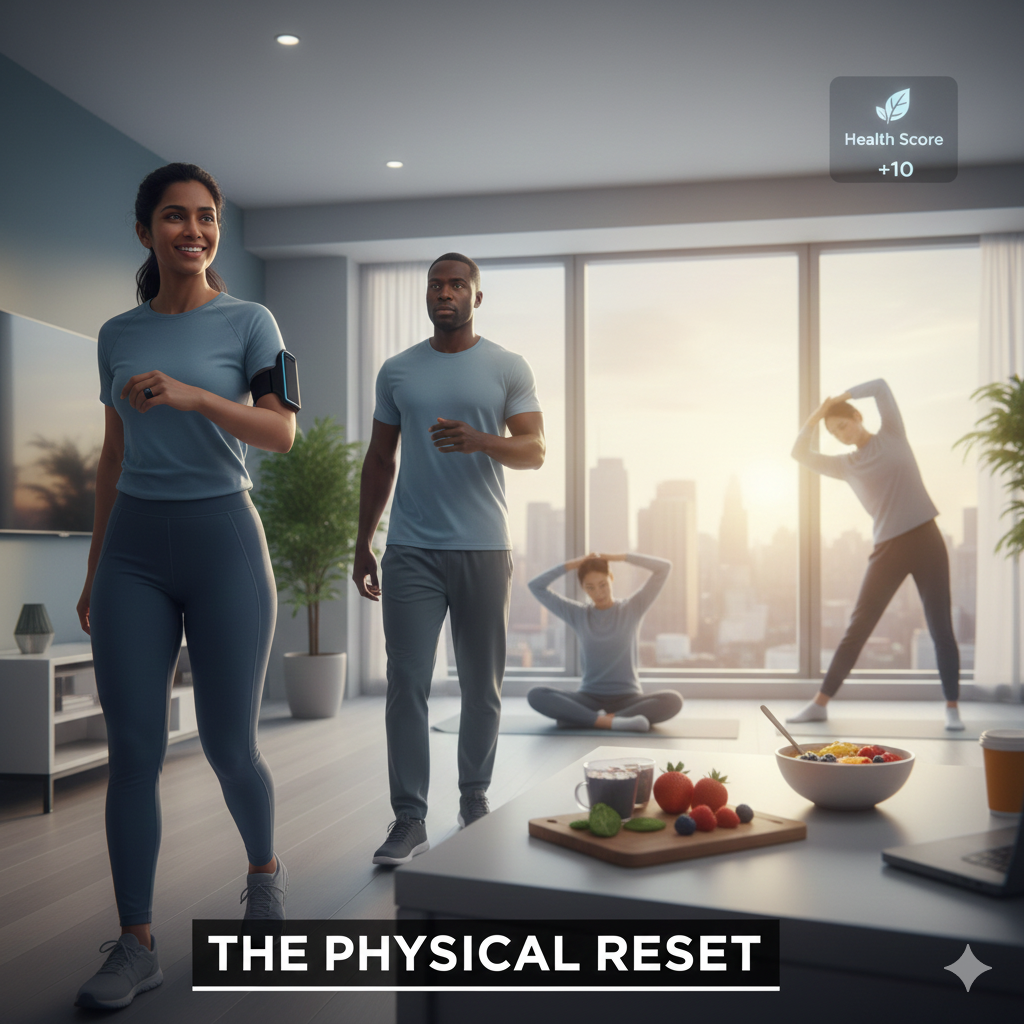
The Physical Reset: The classics never die. Exercising more, eating cleaner, and sleeping better remain the top priorities. In 2026, there’s a massive surge in “Micro resolutions” like hitting 7,000 steps rather than a daunting 10,000.
The Financial Guardrail: With economic shifts, many are resolving to “Unsubscribe from the unnecessary.” Whether it’s cutting dormant streaming services or tracking daily “impulse clicks,” 2026 is the year of the Digital Audit.
The Mental Sanctuary: For the first time, “Mental Health” and “Setting Boundaries” are ranking as high as physical fitness. People are resolving to say “No” more often and to trade endless scrolling for 20 minutes of “Joyful Leisure.”
The Skill Upgrade: Learning a new language, picking up a guitar, or mastering AI tools. These are “Approach Goals” adding something positive to life rather than just taking something “bad” away.
The “Quitter’s Day” Reality: Why We Can’t Cope
Research shows that 23% of people quit their resolutions by the end of the first week, and nearly 43% fail by the end of January. But it’s rarely about a lack of “willpower.” Here is the human truth behind the struggle:
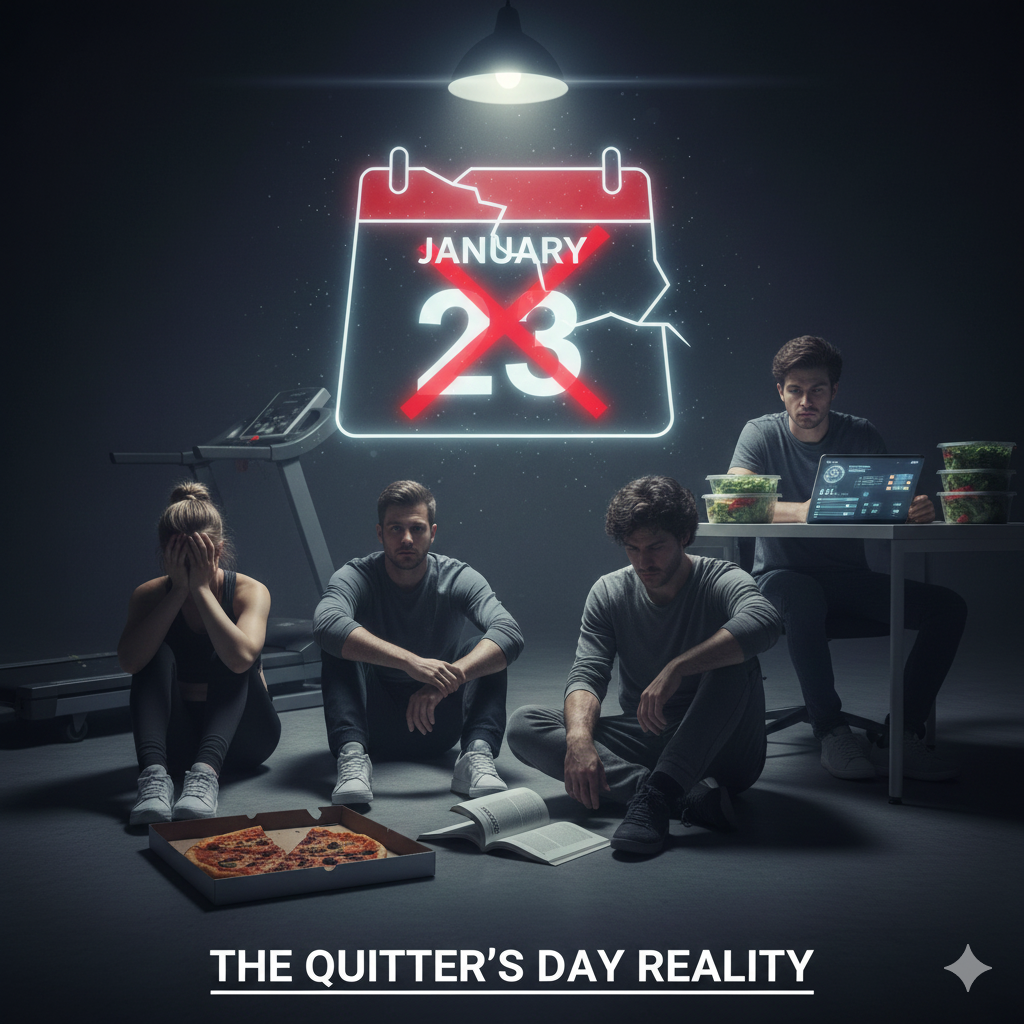
1. The “All or Nothing” Trap
We often view resolutions as a pass or fail exam. If you resolved to go to the gym five days a week and you miss Monday, your brain says, “Well, the week is ruined.” This perfectionism is the #1 resolution killer. We fail to realize that a 15 minute walk is better than zero minutes.
2. Building on Burnout
January is actually a tough time to change. We ask our minds to perform a “lifestyle miracle” at the exact moment we are most depleted from the holiday rush and year end stress. Trying to build a “New Me” on top of a burnt out nervous system is like trying to build a skyscraper on sand.
3. Vague Intentions
“I want to be healthy” isn’t a plan; it’s a wish. Without a specific “What, When, and How,” the brain defaults to its old, comfortable habits the moment you get tired or busy.
4. The “Avoidance” vs. “Approach” Problem
Psychologically, it is much harder to stop a behavior (e.g., “Stop eating sugar”) than it is to start a new one (e.g., “Eat one piece of fruit with lunch”). When we focus on what we are losing, our brain feels deprived and eventually rebels.
How to Actually Make it Stick
If you’re feeling the “January Blues” already, here’s how to pivot:
- Lower the Bar: If your goal feels like a chore, make it smaller. Can’t do an hour of yoga? Do five minutes of stretching.
- Give Yourself Grace: A “slip” is not a “fall.” If you broke your resolution today, start again at your next meal or tomorrow morning. You don’t have to wait until January 2027 to try again.
- Find a “Why,” Not a “Should”: Don’t do it because society says you should. Do it because it makes your life feel better.
Would you like me to help you create a specific plan for one of your own goals?